
Peak Detector
The Peak Detector is that isolates dominant target signals from data arrays via spectrum, spectrogram, or scalogram.
It extracts target candidates (local maxima/sharpest peaks) exceeding the threshold, filtering out various noise.
This function optimizes system efficiency by transferring only high-probability target candidates to subsequent tracking algorithms.

1. Principles and Detection Process
The filtering process evaluates the data array against a threshold to isolate potential targets and eliminate background noise.
Within these screened data arrays, the detector identifies localized local maxima that exceed their spectral or temporal neighbors.
These peak points are ultimately extracted as final target coordinates and transferred to the next interface stage.
| Condition | Energy Threshold: ex) 30 |
Peak energy must be greater than the predefined energy threshold. |
|
| Window Size | 3 x 3 | ||
| Local Maximum Condition |
Center cell must be greater than all neighboring cells. |
||
| NMS Distance Threshold: ex) 2 |
Nearby peak candidates within the distance threshold are treated as the same peak. |
||
|
Input Array & Energy Level |
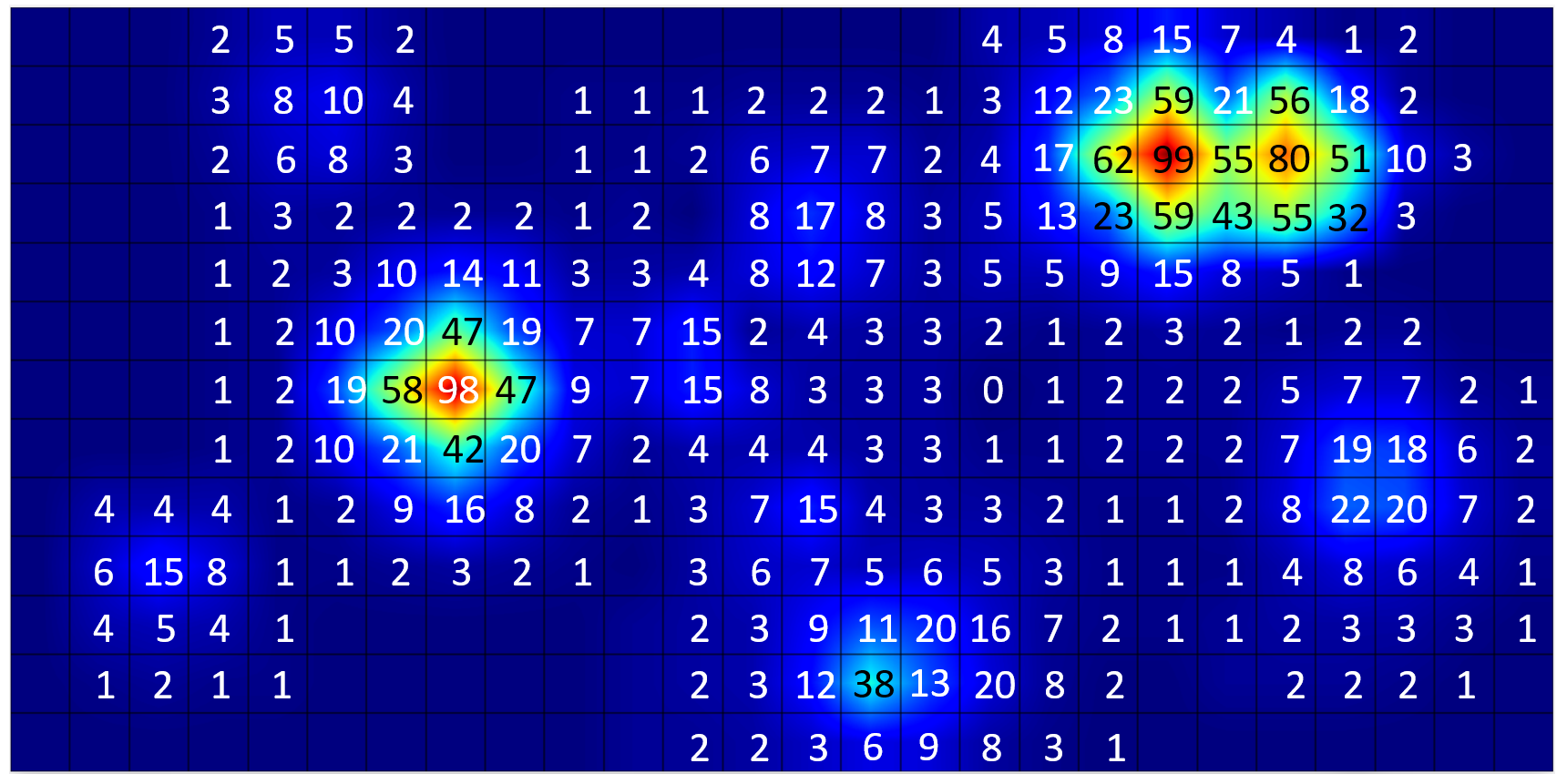 |
||
| Apply Threshold | 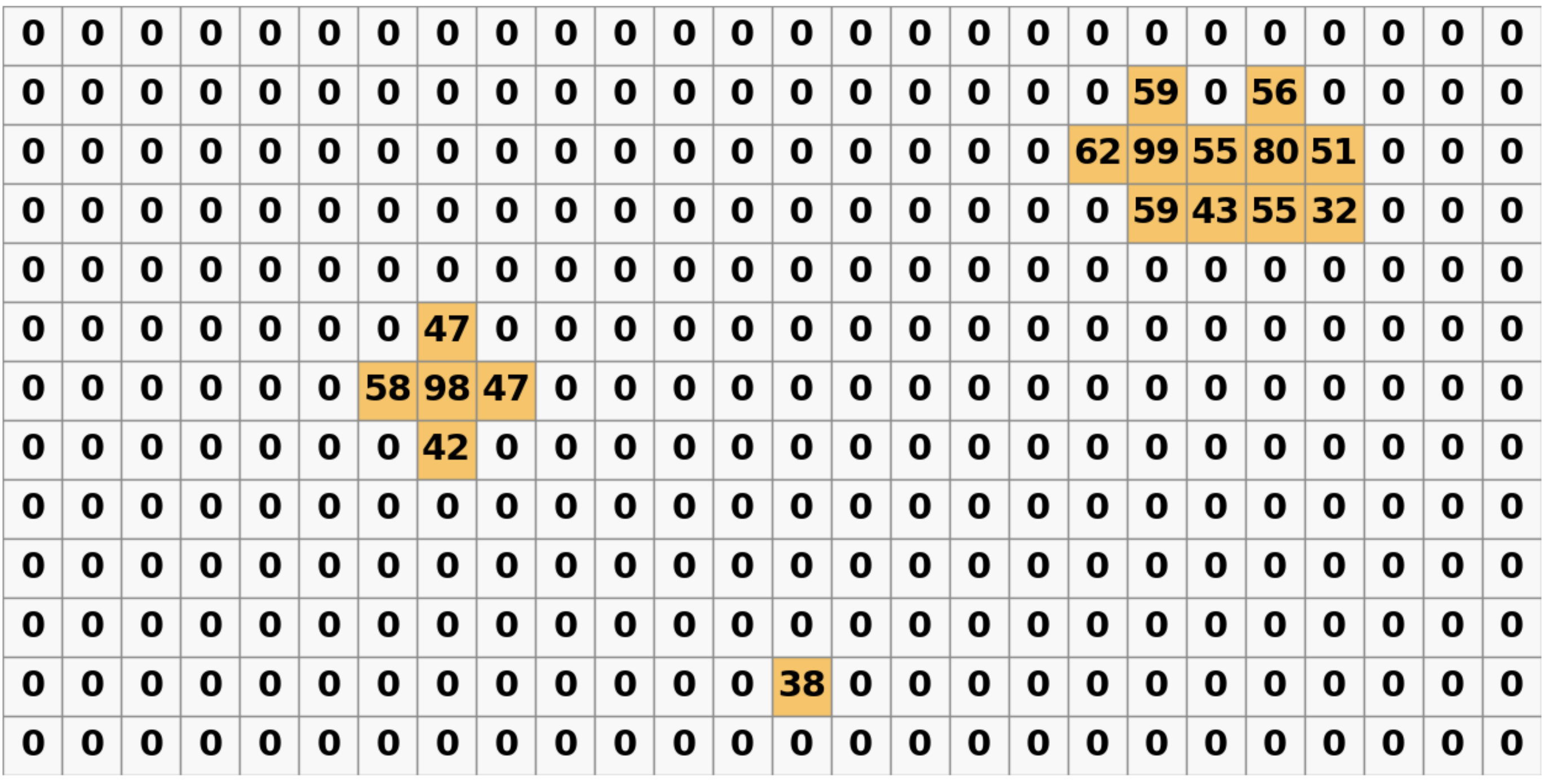 |
1. Apply energy threshold | |
| Local Max Test | 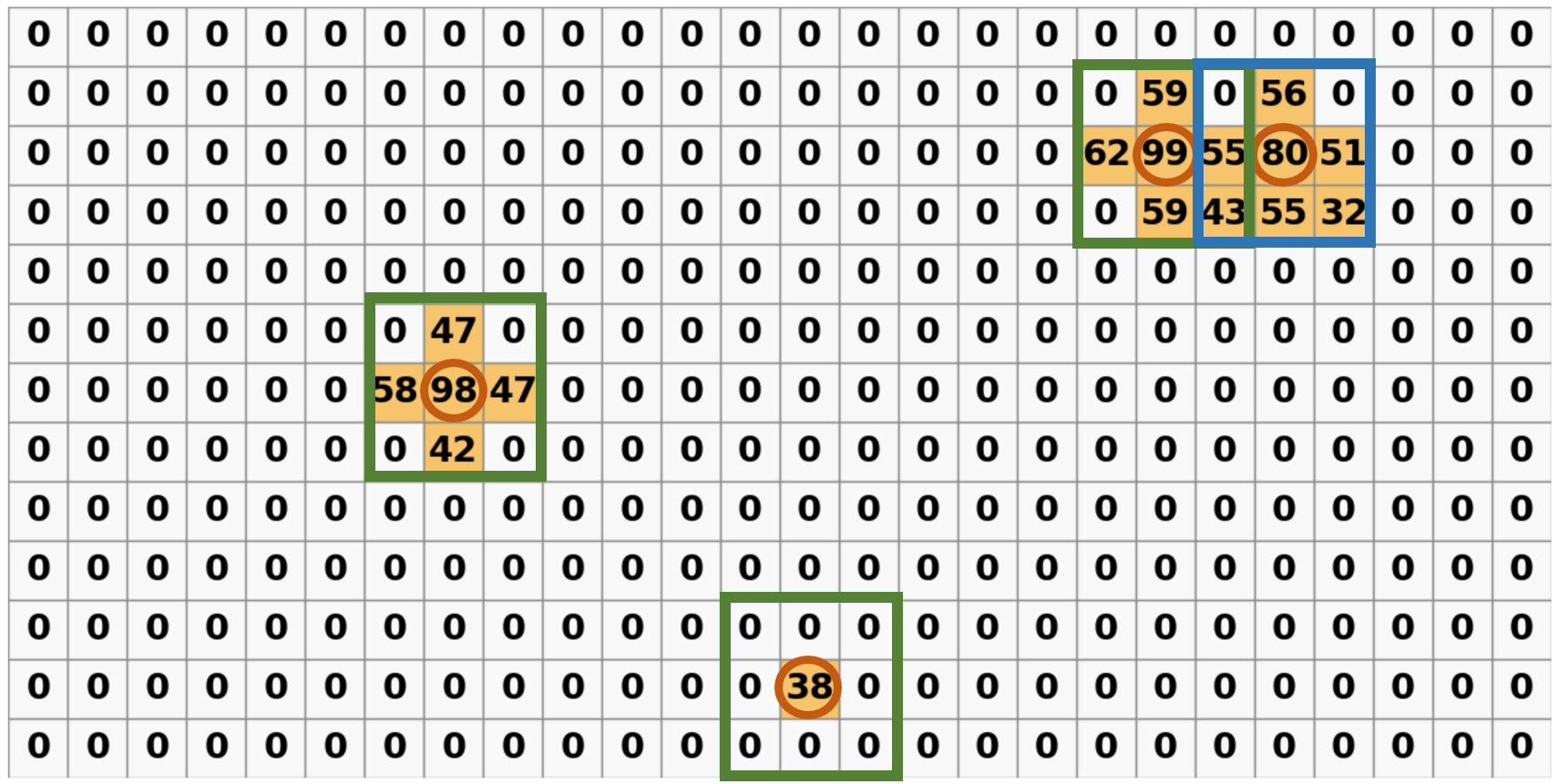 |
2. Slide the 3×3 window over candidate cells – Compare the center cell with its 8 neighbors – If the center value is the largest, 3. Remove nearby weaker peaks ex) Peak 80 is removed because it is within the NMS distance threshold from Peak 99. |
|
| Detection | 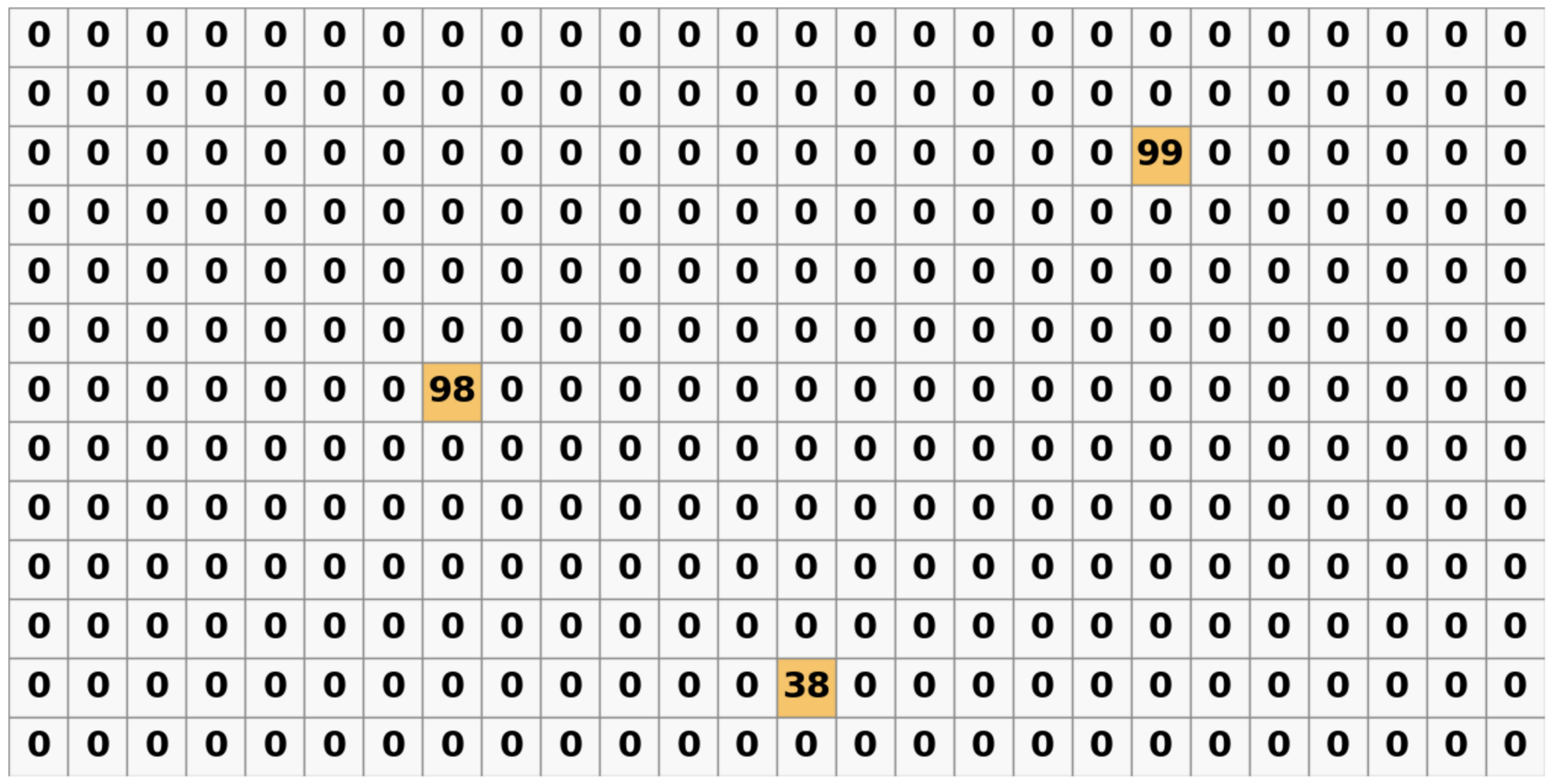 |
4. Output final peaks |

Radar Sensor SoC & Module

WiFi IoT Module

5G/LTE/CAT-M1/NB-IoT

WiSUN/HaLow/Thread Module
