
2. Principle
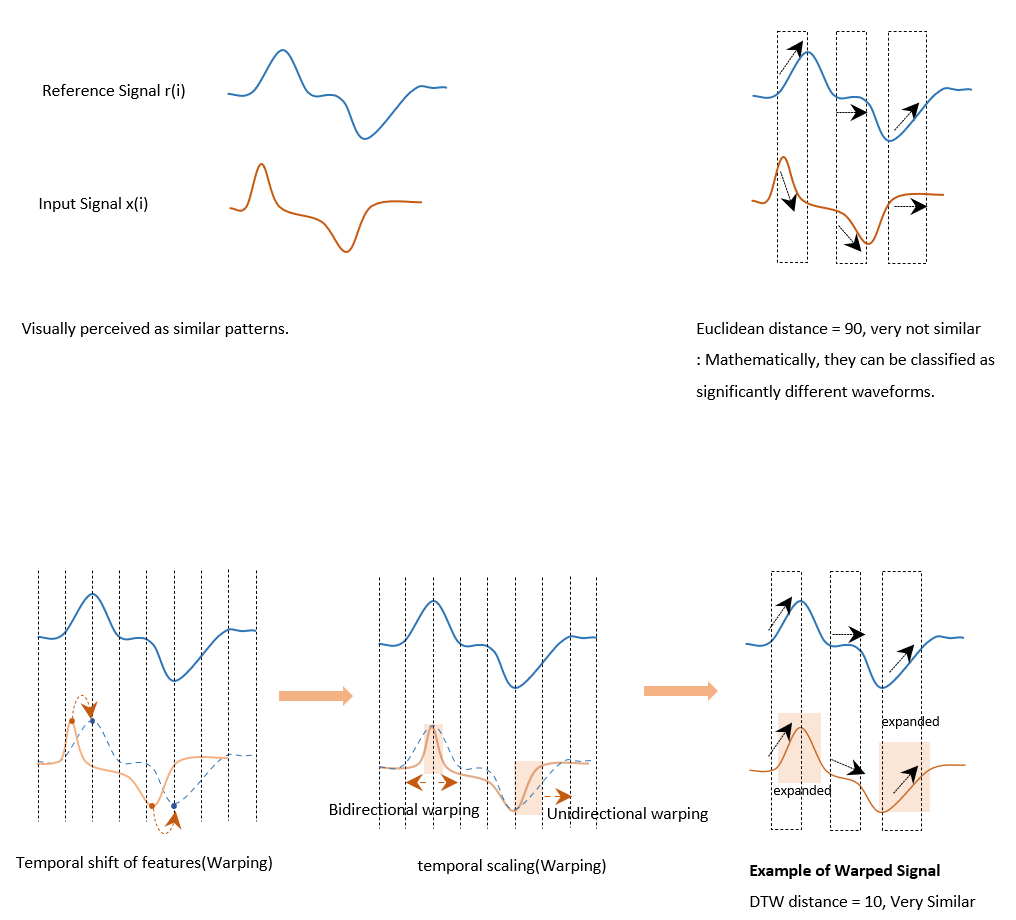
DTW finds the optimal alignment between two signals by allowing nonlinear shifts along the time axis.
It locally stretches or compresses the signals to minimize the overall difference between them.
3. Representation
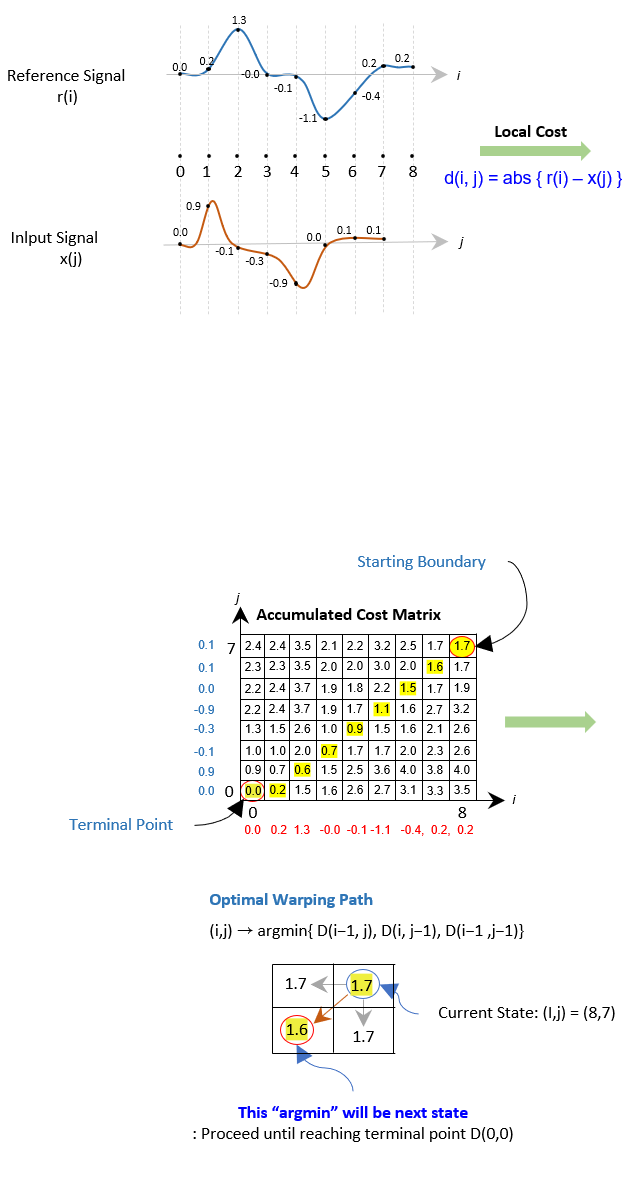
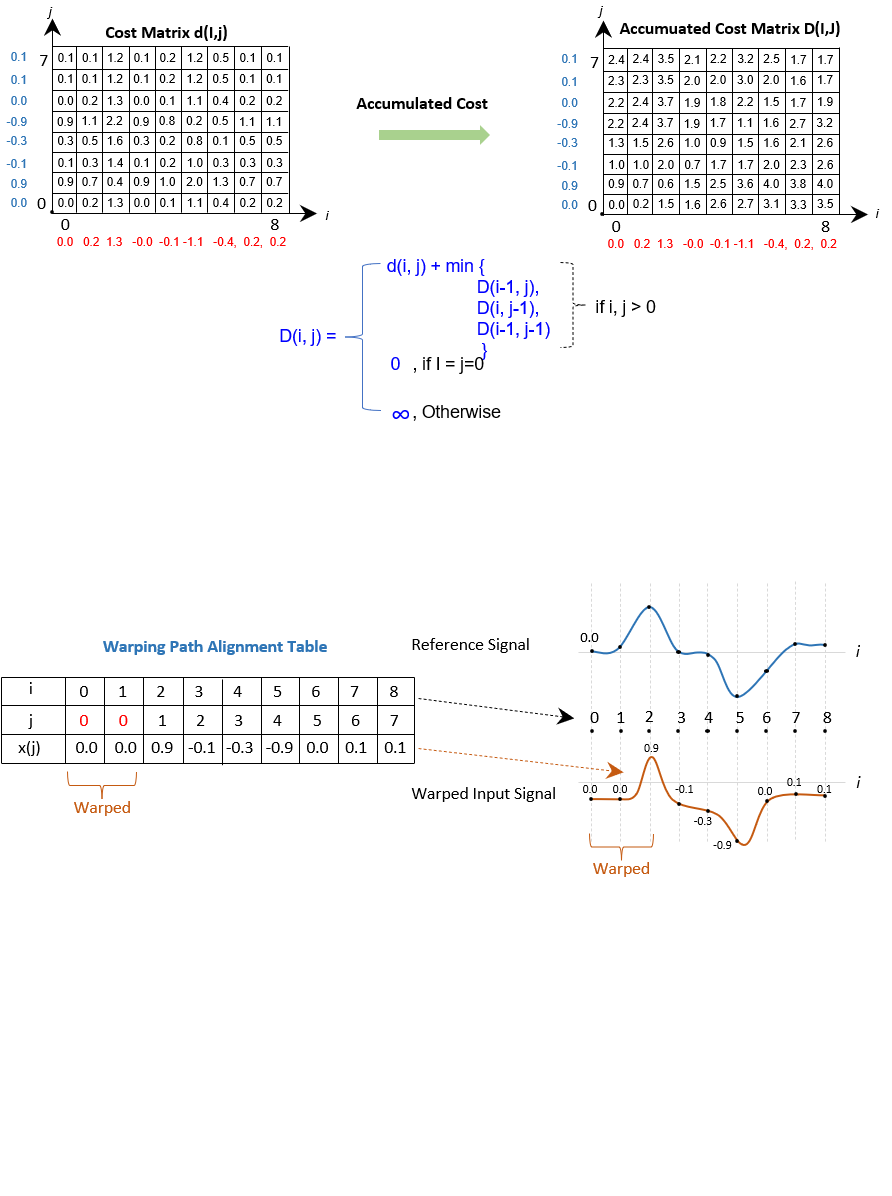
The result of DTW is an alignment path and a distance value.
The alignment path defines how two signals are matched in time, and the distance quantifies their similarity.
4. Interpretation
A smaller DTW distance indicates higher similarity between signals, even when their timing differs.
The alignment path reveals where and how the signals are temporally distorted to achieve the match.
– Illustration: aligned signals with different timing
5. Radar Application
In radar systems, DTW is used to compare motion patterns that vary in time.
It enables the recognition of similar behaviors, such as human movement or repetitive actions, even when they occur at different speeds.

Radar Sensor SoC & Module

WiFi IoT Module

5G/LTE/CAT-M1/NB-IoT

WiSUN/HaLow/Thread Module
