
 |
|
 |
|
 |
 |
 |
2. Signal Processing
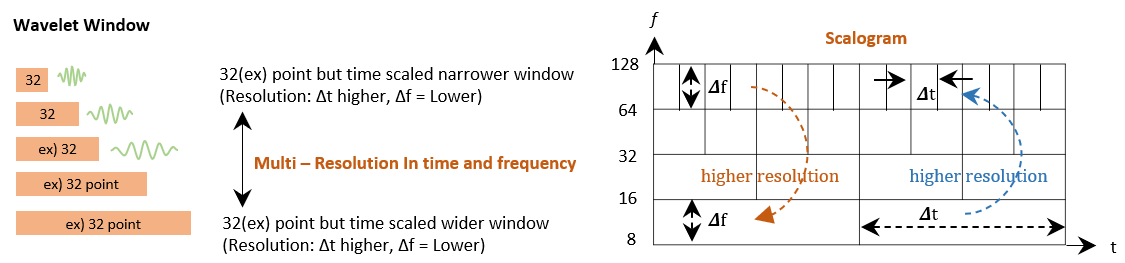
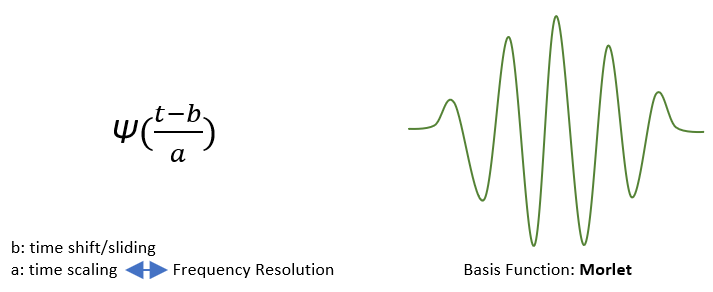
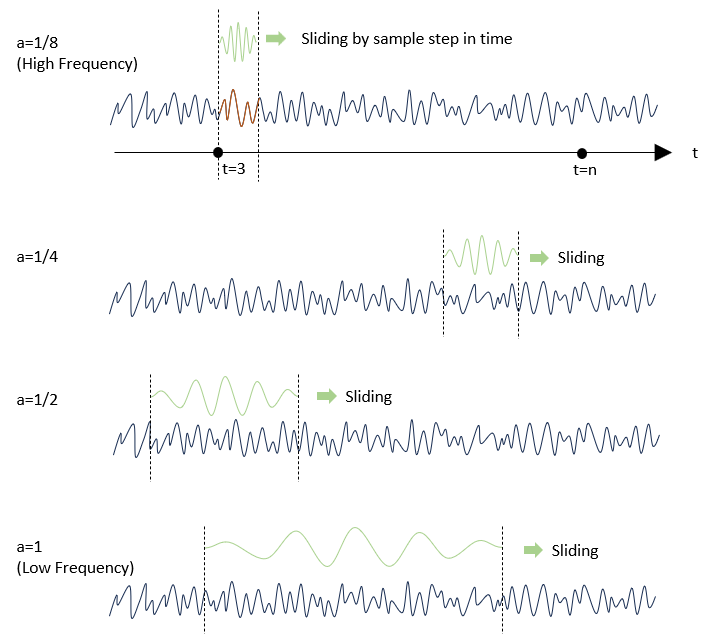
By localized and scaled sinusoidal waveform, the transform varies its resolution across different frequencies, optimizing the capture of specific spectral components.
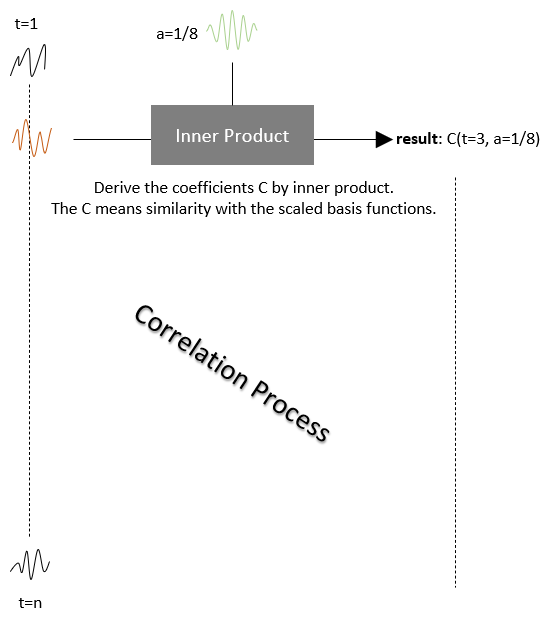
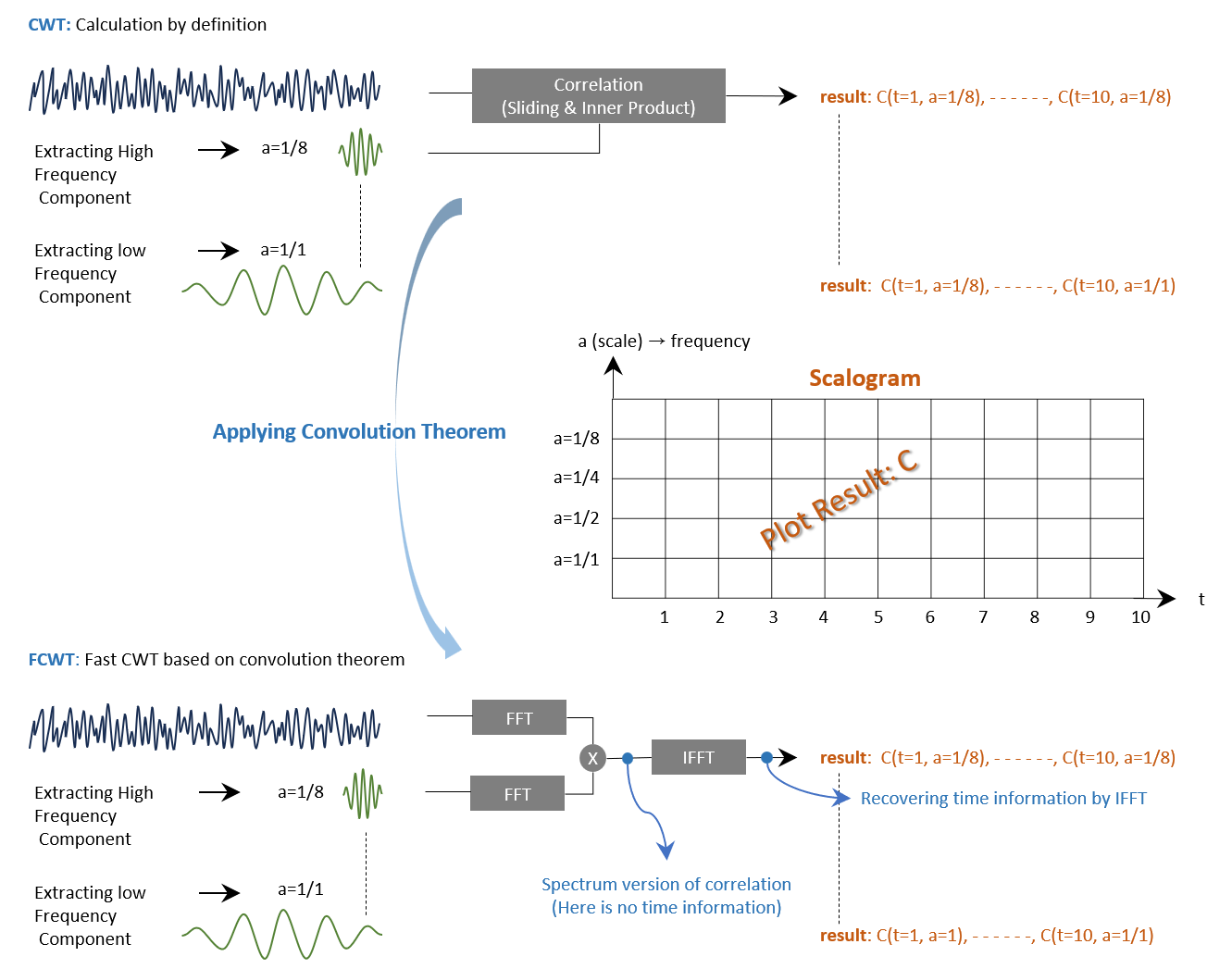
The Morlet Wavelet operates by correlating the signal with scaled and shifted versions of the Morlet basis function.
By adjusting the scale and position of the wavelet, it extracts signal components at different resolutions, enabling advanced time-frequency analysis.
3. Representation
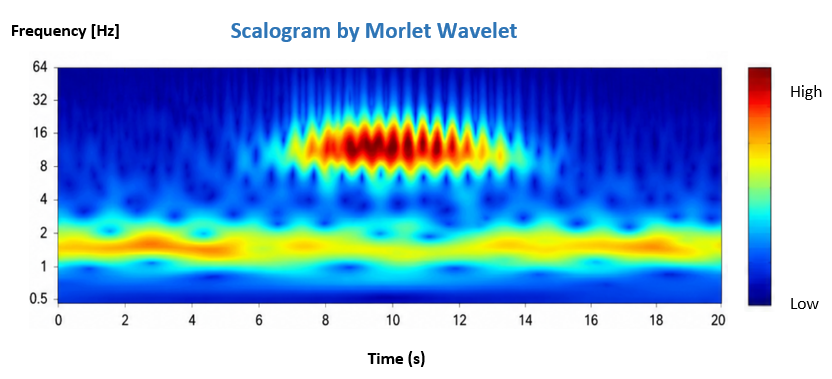
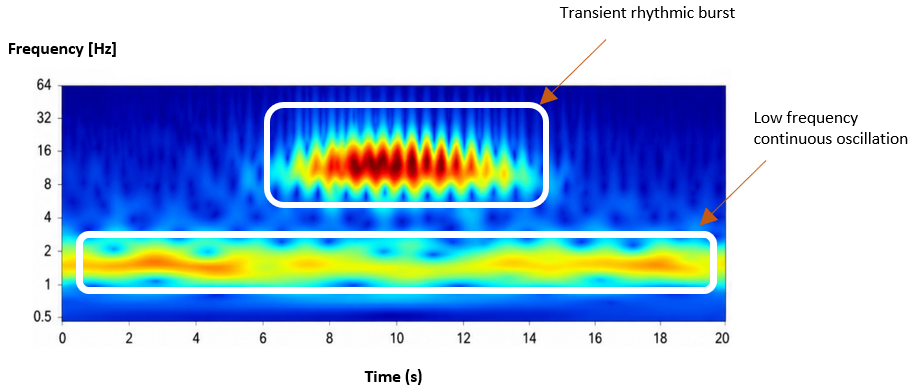
The result of the Morlet Wavelet Transform is represented as a scalogram,
which shows the magnitude of signal components across time and scale.
The scale/frequency axis corresponds to different frequency ranges (inverse relationship), while the magnitude indicates the strength of each component.
4. Interpretation
(1) The transient rhythmic burst (10–20 Hz region) may represent a temporary oscillatory activity
such as human walking motion, rotating machinery vibration, or radar micro-Doppler generated by moving limbs.
(2)The continuously distributed low-frequency component may correspond to slow background motion or baseline oscillation,
such as platform vibration, body sway, engine rotation, or environmental low-frequency movement.
5. Radar Application
In radar systems, the Morlet Wavelet is used to analyze non-stationary signals and time-varying patterns.
It is particularly useful for detecting transient behaviors and complex target signatures that are not easily captured by fixed-resolution methods.
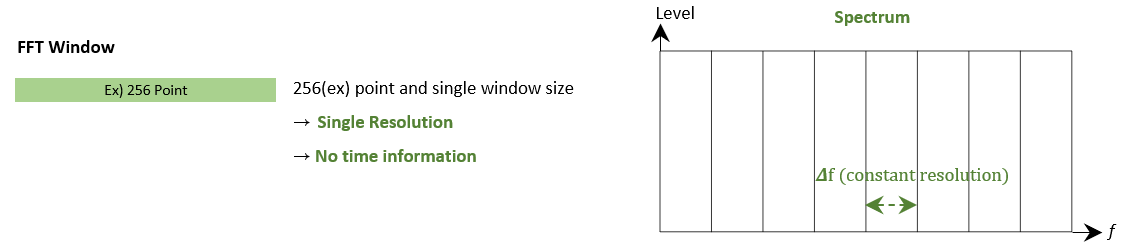
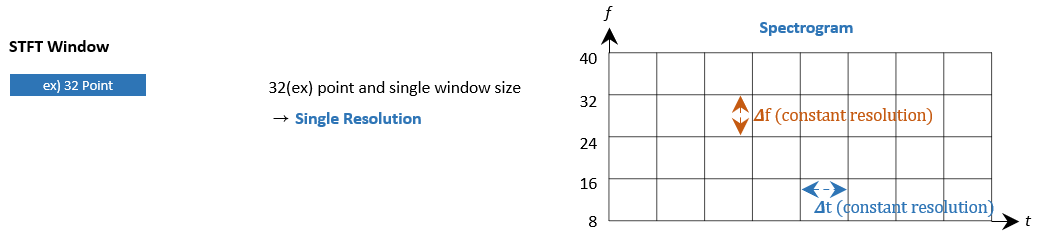
Compared to STFT, the Morlet Wavelet provides multi-resolution analysis, offering better time resolution at high frequencies and better frequency resolution at low frequencies.

Radar Sensor SoC & Module

WiFi IoT Module

5G/LTE/CAT-M1/NB-IoT

WiSUN/HaLow/Thread Module
